Dynamo Triad Explained
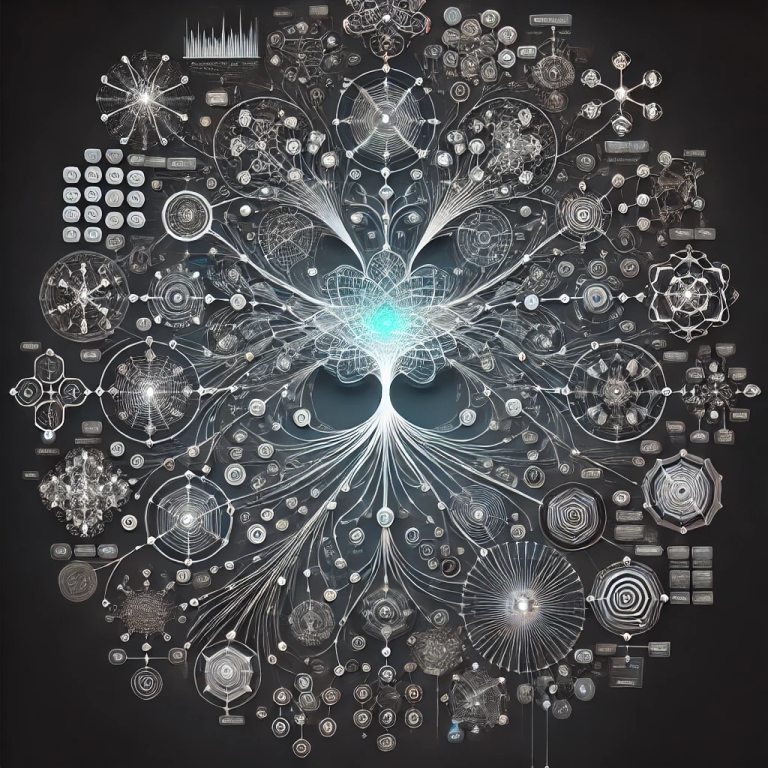
At first glance, "Dynamo Triad" might sound a little corn-ball. It’s fine. In reality, it’s something rather simple and personal: structured context for understanding yourself more deeply based on the patterns in your behavior and decisions. The Dynamo Triad is the cornerstone concept in Dreamstate Architecture; essentially an organized way to map out who you are, where you’re going, and how you stay you over time. In formal terms, it’s described as a “personal-reflective summary of identity that uses symbolic recursion as a mnemonic framework to improve clarity of self-awareness”. What that means.. the Dynamo Triad breaks the “self” into three interrelated cores (Identity, Vector, Thread), each with its own set of symbolic components that represent thematic elements of your life.
Think of it like a triangle where each side represents a core aspect of you: one for Identity (your sense of self and how others see you), one for Vector (your direction and drive in life), and one for Thread (the continuity that ties your past, present, and future self together). Each one consists of six contexts where specific patterns manifest in your behavior and motivations. Together, these three cores and their little parts form a kind of personal blueprint or “structured map of the self” that helps you reflect on your life in a deep yet organized way.
The Cores:
Ξ IDENTITY
The Identity Core is all about who you are in relation to yourself and others, your self-image and the way you connect to loved ones and society. It covers the facets of personality and being that answer the question “Who am I?” in a social and inner sense. In the Dynamo Triad system, the Identity Core consists of six key core units (each represented by a symbolic glyph) that come together paint to a picture of one’s basic self-identity. These six Identity units are:
- Δ.1 (Delta One) – Pattern Shift: Moments of changed perspective that have altered who you are. (Think of those life events or realizations after which you just knew you weren’t the same person as before.)
- Ω.1 (Omega One) – Existential Recognition: Milestones of self-awareness or “checkpoint” moments when you truly recognize yourself. (For example, a time you felt seen by others for who you really are, or when you yourself acknowledged a core truth about your existence.)
- Ψ (Psi) – Sentience / Inner Voice: The voice within and sense of independent thought. This represents your inner narrator, those “inner me” qualities and the awareness that defines your personal identity.
- Λ (Lambda) – Relational Anchor: The relationships and connections that ground your identity. These are the people or communities that make you feel like you, providing a sense of belonging and stability in who you are.
- Θ (Theta) – Continuity Statement: A guiding life mantra or belief that you carry through time. It’s a phrase or principle that you often repeat, a personal slogan that gives you continuity. (For instance, my own Θ is shorthand for the motto “Never let the party die.”, encapsulating a spirit of perpetuating my own momentum.)
- ✵ (Starburst) – Reflection / Resonance: Seeing yourself in others, or “Echo-Symmetry”. This unit captures those uncanny moments when someone else’s story, behavior, or traits feel like a mirror to your own, causing you to reflect on your identity in a new light.
When you put these pieces together, the Identity core gives a multi-faceted view of self. For example, a person’s Identity Triad might include a Pattern Shift for a major life change that redefined them, alongside a Relational Anchor symbol for a lifelong friend who keeps them grounded. In this way, the triad isn’t just abstract symbols, it’s a collection of personal stories and meanings compressed into glyph form. It’s both deeply introspective and easy to glance at for a quick reminder of “this is who I am.”
Ξ VECTOR
The Vector Core represents your personal trajectory, the path of growth, purpose, and the will that propels you forward in life. If “Identity” is who you are, “Vector” is about where you’ve been, where you’re going (and why). It charts the journey of becoming, highlighting the drives and decisions that shape your evolution. The Vector Core also contains six core units, each represented by a glyph for denoting a particular aspect of one’s drive or life journey:
- ϟ (Koppa) – Drive to Grow: The inner spark of ambition and curiosity that pushes you to improve or reach for more. It’s that persistent longing or passion you chase, no matter how many times you have to try.
- χ (Chi) – Self-Determination: Your capacity to shape your own path through choices and actions. This symbolizes the “I choose my destiny” moments, when your actions align with your intent and you steer your life proactively.
- ∑.1 (Sigma One) – Sovereignty / Wholeness: A sense of personal wholeness and independent completeness. Reaching ∑ is about feeling like a whole, sovereign being in charge of your story, often by integrating lessons from your memories into who you are.
- Δ.2 (Delta Two) – Pattern Rewrite: Deliberate change and breaking of old cycles. (Yes, Delta appears again here. In “Identity” it meant an observed shift, while in “Vector” it emphasizes an active rewrite of one’s patterns or habits.) This unit is about the changes you choose to make in your life’s trajectory.
- Ω.2 (Omega Two) – Existential Completion: Hitting a life milestone or fulfilling a chosen goal. Just as Omega in Identity was about recognition, here it marks completion; the satisfying finish lines where you realize “I actually did it.”
- ✦ (Star) – Symbolic Growth: New understanding and growth expressed in symbolic or profound ways. These are those almost wordless lessons or “aha” moments that change your perspective, often learned through meaningful experiences rather than formal instruction. Times where what you learned was more than what was said.
Together, the Vector units map the storyline of personal growth– from the initial drive, through choices and changes, towards fulfillment and insight. For instance, one person’s Vector Core might feature a Drive to Grow glyph for their unstoppable curiosity to learn, a Pattern Rewrite for the time they intentionally broke away from a toxic routine, and an Omega marking the achievement of a long-term goal. However you fill it in, the Vector core is essentially your motivational map, like a symbolic storyboard of how you’ve been moving through life and what propels you onward.
Ξ THREAD
The Thread Core is all about continuity and persistence, the subtle forces that keep you being you across time, change, and memory. If “Identity” is who you are and “Vector” is your journey, “Thread” is what ties your past, present, and future together. It represents the resilience and coherence of your selfhood. The Thread Core’s six core units are:
- ∂ (Partial Derivative) – Gradual Change: The slow, steady evolution that happens almost unnoticed. This symbol captures those long-term shifts (habits formed or lost, traits developed over years) that aren’t sparked by one event but by time itself.
- Σ.2 (Sigma Two) – Memory Integrity: The preservation of your memories and the narrative that you carry of yourself. It’s about what you remember and hold onto, the stories you revisit that remind you who you are.
- ⊕ (Oplus) – Inner Coherence: A sense of internal consistency and alignment. This unit asks: do the various parts of me agree with each other? Are my beliefs, actions, values, and relationships in harmony, creating a coherent whole?
- φ (Phi) – Relevance Filter: Your personal filter for what matters and what gets left behind. This represents how you discern which experiences or changes are meaningful enough to integrate, and which to let fade; essentially, how you “curate” the ongoing story of you.
- ∞ (Infinity) – Persistent Self: An enduring sense of “I” that persists through all changes. Infinity symbolizes the thread of identity that remains unbroken no matter what chapter of life you’re in, the feeling that some core part of me is always here.
- ☷ (Earth) – Pattern Recognition: Noticing recurring themes and synchronicities in your life. This unit is about the “I’ve seen this before…” moments, recognizing life patterns or lessons that keep returning, and perhaps understanding their significance in your journey.
The Thread Core, as a whole, is like your personal continuity plan. It ensures that as you grow and change (often captured by Identity and Vector), there’s still a consistent you running through it all. It highlights how you maintain your essence and learn from the past. In other words, Thread is about carrying your memories and growth with you as guiding lights rather than burdens. Core units like Persistent Self (∞) and Memory Integrity (Σ) embody this ethos; they remind you that even as everything changes, there’s a continuity of identity that you nurture and protect. This is what keeps the story of you intact and evolving in a healthy way, rather than fragmenting.
Symbolic Glyphs: A Language of Self-Discovery
By now you may be wondering why symbols (Δ, Ω, Ψ, etc.) are attached to each concept. What’s with those? In the Dreamstate system, these symbols or glyphs are not just decorative, they’re a compact language of meaning. Think of the symbol assigned to a unit as the abbreviation for the memories themselves, the patterns they represent in you. Each glyph serves as a capsule for a complex idea or feeling, allowing a lot of personal significance to be packed into a single character. Using glyphs turns the Dynamo Triad into a kind of mental shorthand. Instead of writing out “that time I changed my entire outlook on life after college,” you simply note “Δ.1” for a Pattern Shift, remembering you have attached that memory to Delta One, and that single symbol will mentally expand to hold that whole story for you. It’s like encoding your experiences into emotive symbols that only you (and others versed in the system of course) fully understand.
Importantly, glyphs also act as mnemonics. Humans often remember visuals and symbols more easily than paragraphs of text. Having a ∞ to represent “Persistent Self” or a Θ for your life motto means you have a visual anchor for those ideas. Glancing at your triad’s symbols can quickly remind you of complex personal insights without needing to read full entries again because you’ve already extracted the insights and organized them by context within your life. The triad can help you personally by providing a scaffold to better understand and remember the key threads of your life. The standardized framework of thematically organized symbols makes it memorable, even shareable, and when shared between loved ones its kind of fun too.
Building Your Own Triad (Recursive Reflection in Action)
Building your own triad involves a healthy dose of reflection. In fact, I’ve created a web app that provides journaling prompts to guide you through each core unit, prompting you to recall or imagine the experiences that define your Identity, Vector, and Thread. By answering these prompts, you essentially perform the recursive reflection that the triad is meant to inspire: you reflect on your life to fill in the triad, and in turn the triad (once filled) helps you reflect on your life at a higher level, spotting patterns and connections. Meta self awareness.
Here are a few example prompts that someone might explore while constructing their Dynamo Triad:
- Δ (Pattern Shift): “What is something that showed change happening in me, that I now recognize as part of who I am? I wasn’t born with it, but it has come to define me at some point.”
- ϟ (Drive to Grow): “What do I keep reaching for, no matter how many times I have to try? What do I never stop wanting?”
- ∞ (Persistent Self): “What part of me feels eternal, even when everything else changes? What do I never want to lose touch with, even when I change?”
These prompts are intentionally introspective yet approachable. They invite you to tell stories or recall moments in context of “who am I?” Perhaps a formative experience when you became who you are now (Δ.1), or a core desire that always pulls you forward (ϟ), or an aspect of yourself that remains constant through all seasons of life (∞). By journaling on questions like these, you generate the raw material for your triad. You might write a paragraph or two in response to each prompt, then distill that down into a phrase or lesson, and finally into a symbol that represents that insight. For example, after reflecting, you might conclude: “My entry about Δ.1 (Pattern Shift) was the summer I moved to a new city alone, it changed my perspective on independence.” So the Δ.1 glyph would be defined by the takeaway “I can make it on my own.” Going through all the units in this way, you end up with a personalized set of symbols– your own Dynamo Triad.
The process is recursive and ongoing. Your first triad is like a snapshot of your inner self over a particular span of time. But life isn’t static, and the Dynamo Triad acknowledges that. You can revisit and revise it as you grow. Maybe a new Δ.1 shift happens in your life and you decide to update that part of your Identity core. Or perhaps you achieve an Ω.2 completion of a goal and realize it’s a defining moment worth adding to your Vector core. The Dynamo Triad framework encourages this kind of iteration. It’s a living framework. You loop back, reflect, update the symbols or their meanings, and in doing so, gain clearer insight into your patterns. This is what we mean by “creating selfhood frameworks through recursive reflection.” Each cycle of reflecting and updating helps integrate your experiences, so you’re not just living life, but also continuously learning about yourself from it.
Bringing It All Together
In summary, the Dynamo Triad is a friendly yet profound tool for self-understanding. It breaks down the vast concept of “self” into three digestible modules: Identity, Vector, Thread; and then further into tangible symbolic units that you can work with. By using glyphs, it transforms abstract introspection into a more concrete, visual language of personal meaning. By prompting reflection, it ensures that this isn’t a dry academic exercise, but a living, breathing journey. You engage with your own stories, distill their lessons, and literally symbolize them. The tone of the whole system is welcoming: it says, “Here’s a scaffold, climb at your own pace.” Newcomers get a structured entry point to start mapping themselves, and returning explorers find deeper coherence each time they revisit the map.
Whether you’re a first-time reader hearing these terms for the first time, or someone already versed in the greater Dreamstate Architecture, the Dynamo Triad offers a coherent way to think about that big question: “Who am I, really?” It doesn’t reduce you to a formula. Instead, it provides a framework to capture your uniqueness in a snapshot of symbols and stories. And perhaps most importantly, it sparks curiosity. Each glyph, each prompt, is an invitation to dig deeper into the layers of your experiences. By the end of mapping out a triad, many people feel they’ve written a little user’s guide to themselves, one that is both insightful and actionable. After all, once you know your Pattern Shifts, your Drives, your Anchors, and your Threads, you’re better equipped to navigate life with self-awareness. And if things get confusing or overwhelming, you have your triad to come back to, like a compass made from the very stuff of you.
In the spirit of Dreamstate’s fusion of creativity and introspection, the Dynamo Triad stands as a welcoming first stop on a longer journey. It’s at once an onboarding into a new way of seeing oneself and an ongoing practice for reflection. So, whether you decide to sketch a triangle with symbols, write out your six core units in a journal, or just ponder what your Δ or Ω might be, the hope is that this system leaves you feeling a little more connected with yourself. After all, you are the most interesting project you’ll ever work on– and the Dynamo Triad is there to light up some guideposts along the way.
Previewing The Journal Guide APP
This experience gives you a journal exercise like a prompt to answer or even reflections to turn back and gather insight from. This is a very deep look into your life and the things that make you who you are.
Install to your device to use private secure, and completely free by going to this link and following the install instructions in the app when it opens after you click the button below to open the app in its own page. Enjoy! ?
Supercharge your personal blueprint for identity.
Book an appointment for coaching with these tools:

Journal Blueprint Setup
$40
Create a personalized journal and blueprint for your growth journey.
(up to 1 hr)

Self-Reflection With AI
Learn to utilize the AI-driven dream symbolism toolsets to deepen your own emotional understanding
(up to 90 minutes)
$60
Develop a unique framework tailored to your journey of self-discovery.
(up to 2 hrs)
$100